


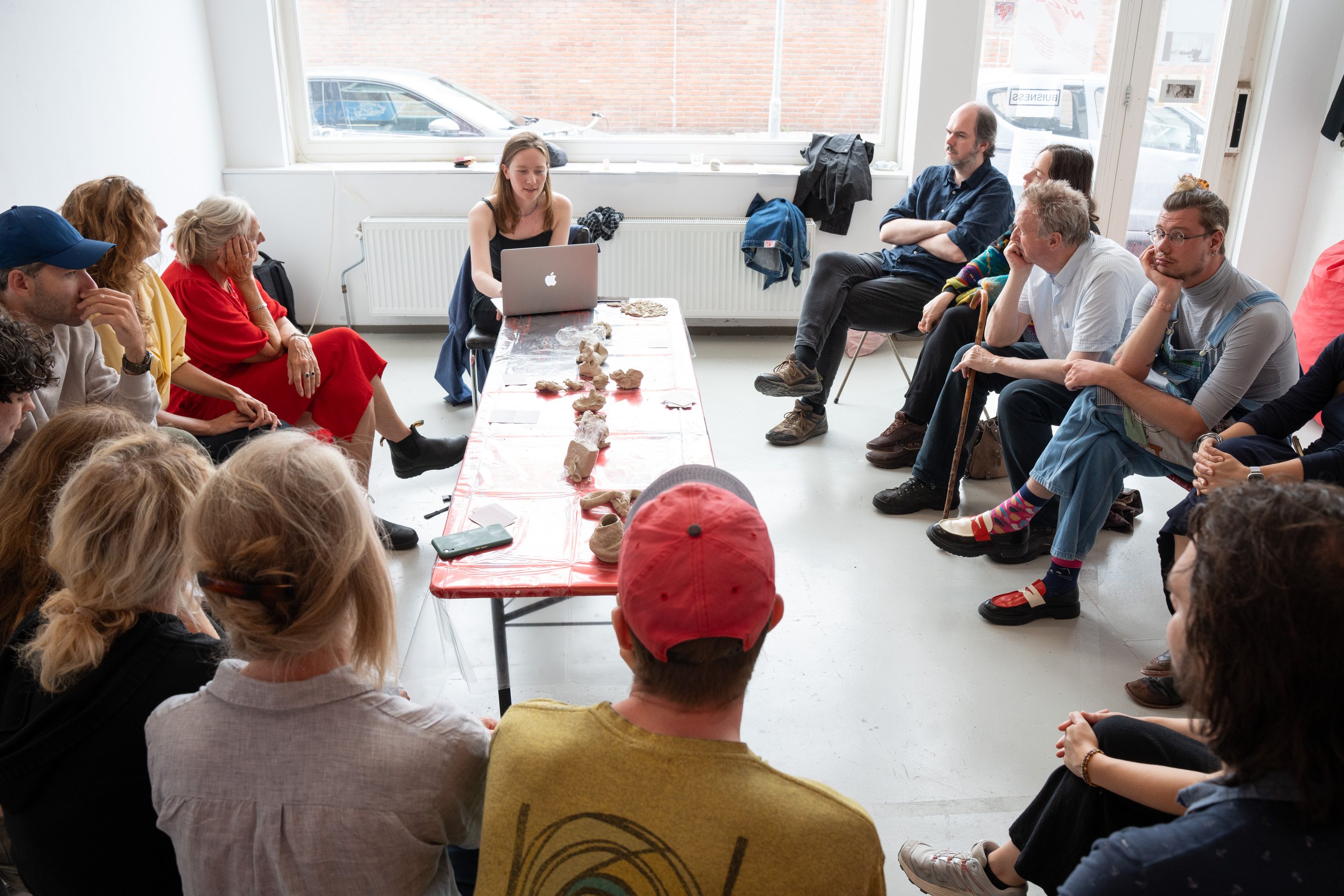
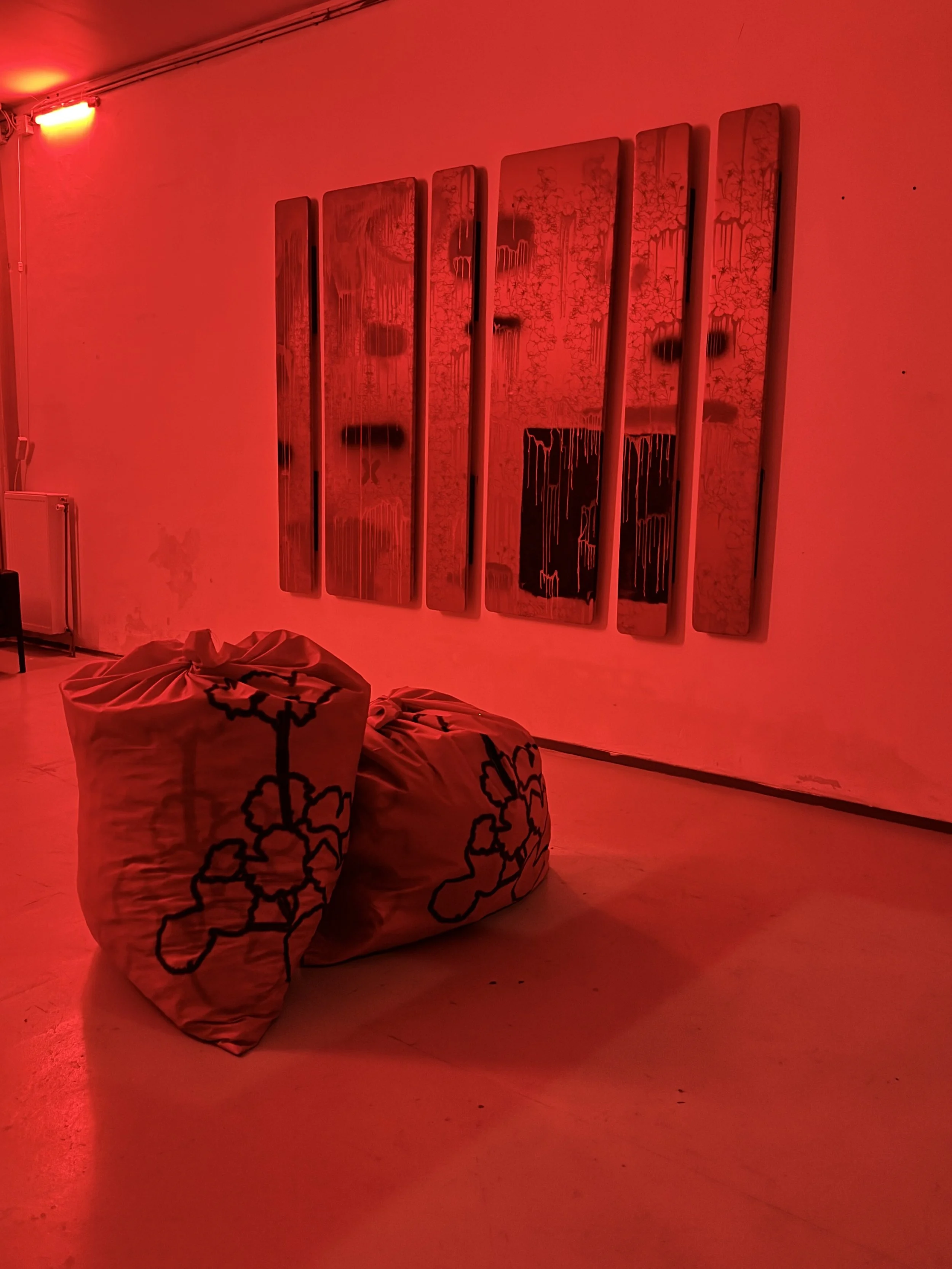
BE NICE is a participative gathering organized by Manon Malan and Lisa Meijer at BUISNESS, an artist-run space in Rijnhaven Rotterdam. This event brings together community, food, performance, art, research, dialogue and above all emotions.
BE NICE invites FLINTA artists to reflect on our everlasting heritage of repressed feelings: being nice to avoid conflict, smiling for the sake of pleasing. Together, we explore how our behaviours—even when ‘deconstructed’—are still shaped by traditional gender roles, and how we internalize expectations of niceness when we feel frustrated or angry. Why do we soften our voices, lower our tone, and stay cool, when our emotional landscape is burning?
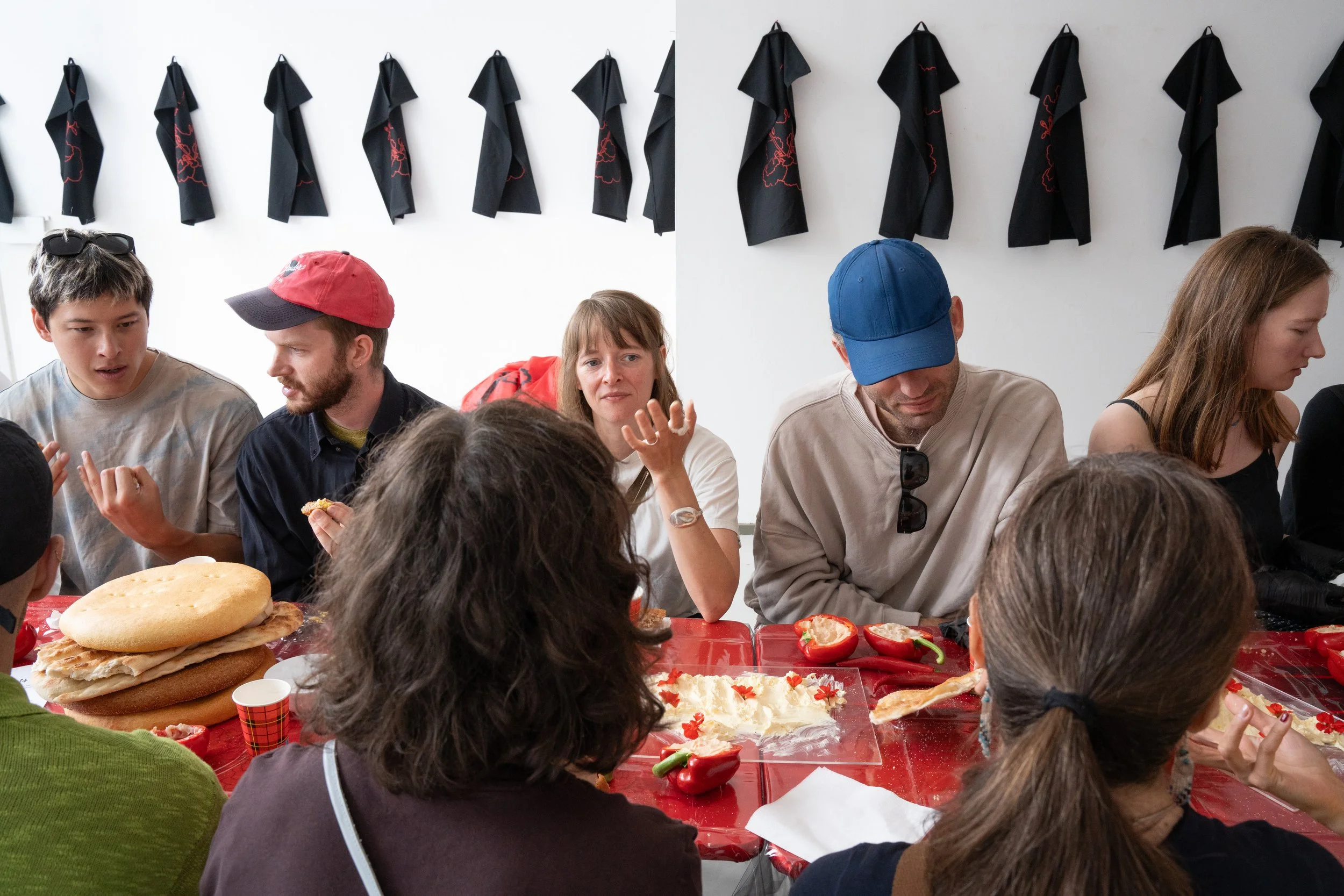
Alongside the joy of coming together around music and food—through a brunch, a participative workshop-performance and a lecture/talk about the history of emotions— this group exhibition creates space for shared experiences, misunderstandings, and emotions. We welcome honesty, anger, mistakes, bad taste, vulnerability and the unapologetic display of feelings. By doing so we hope to open conversations about how we adapt our behaviour to please others, and how we might break free from these patterns—and if we want to break free at all.
Artists:
Visual installation work by Manon Malan
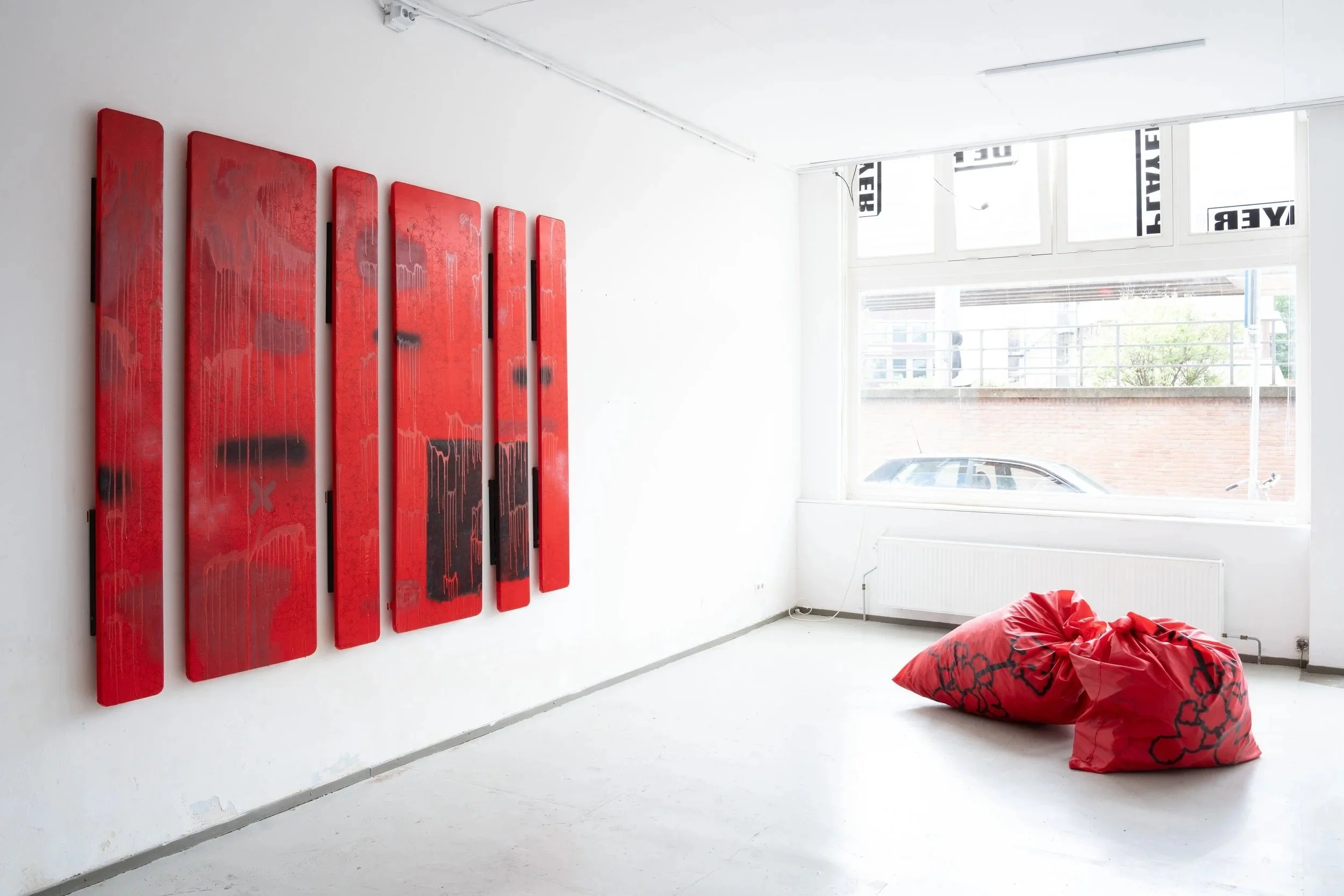
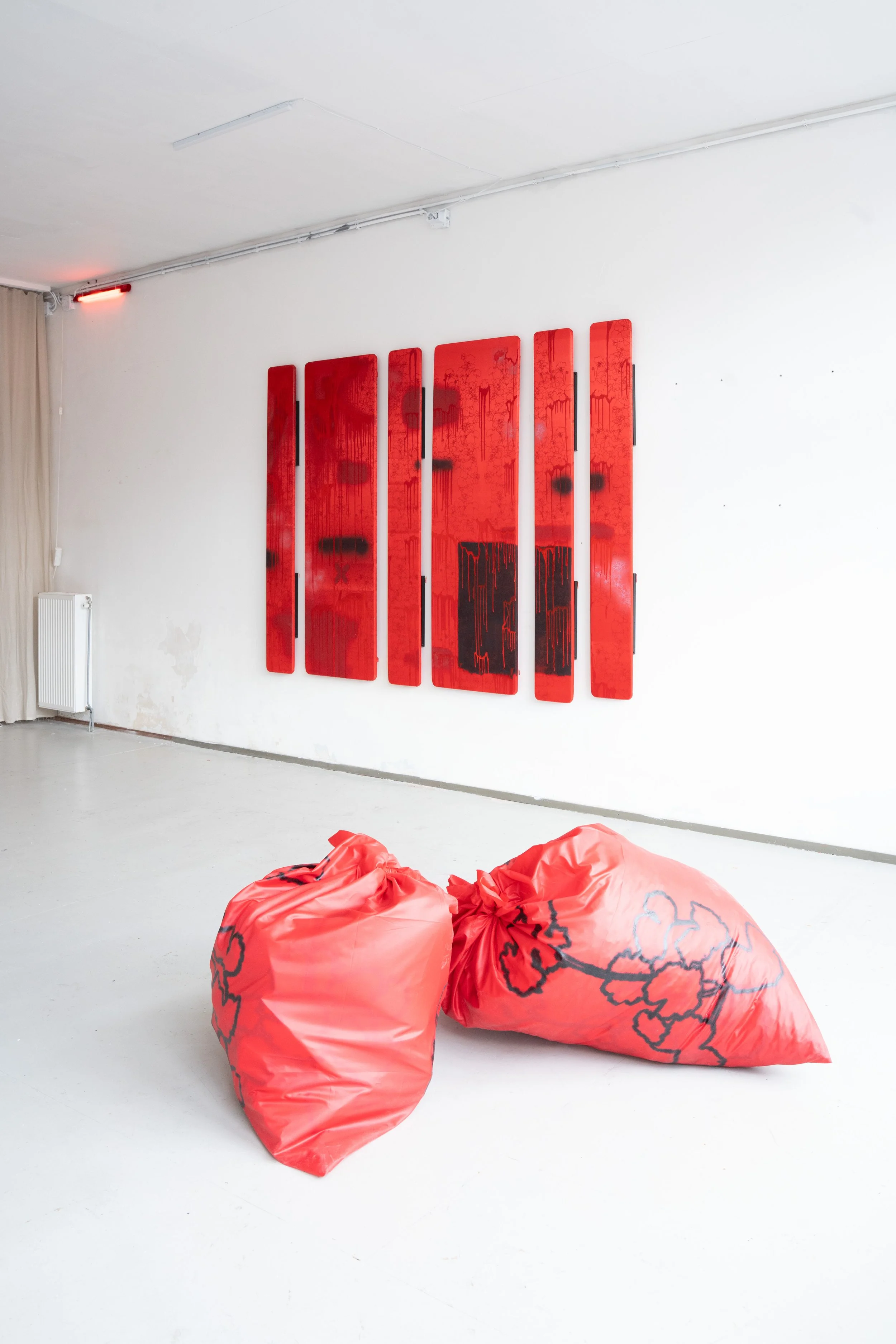
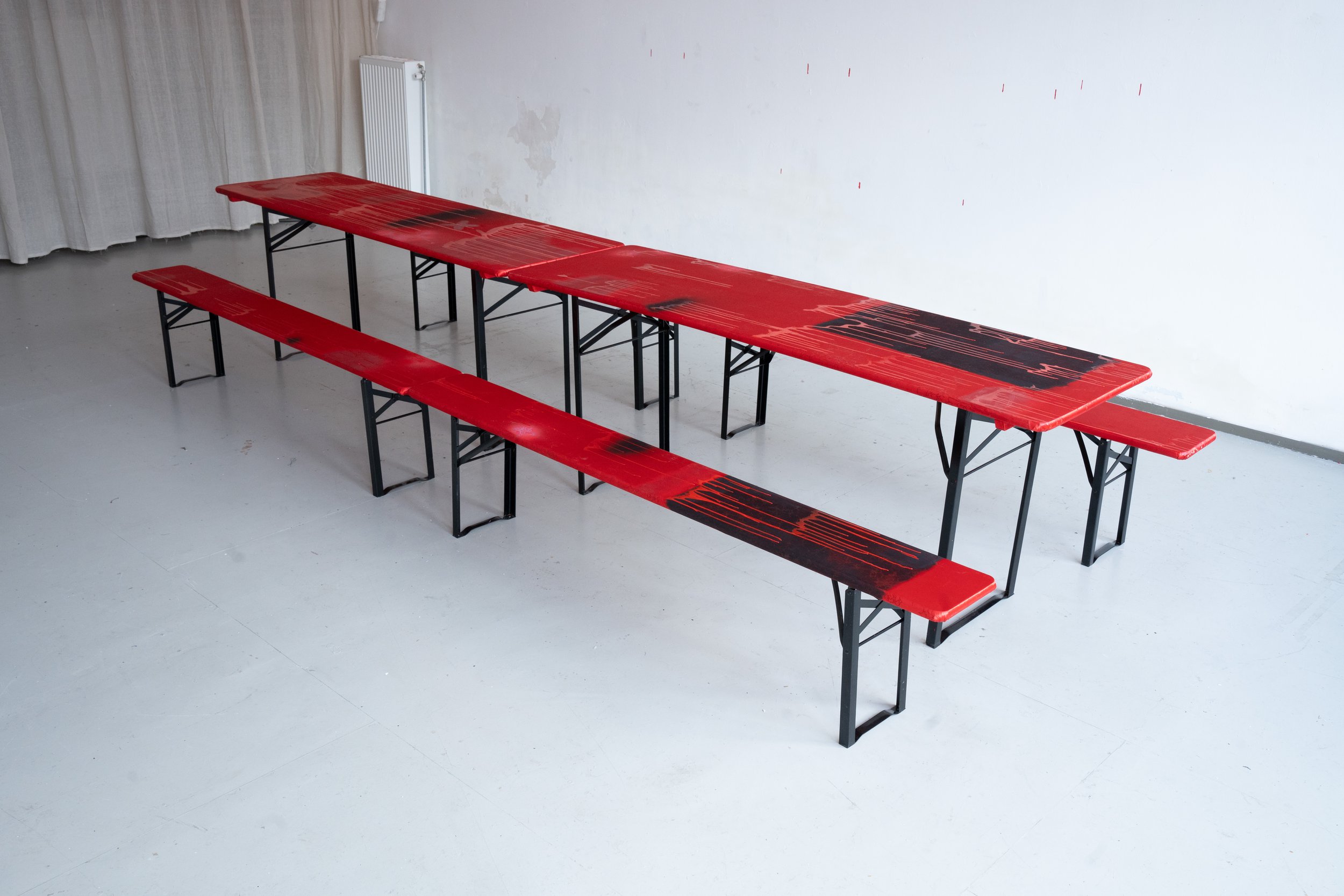
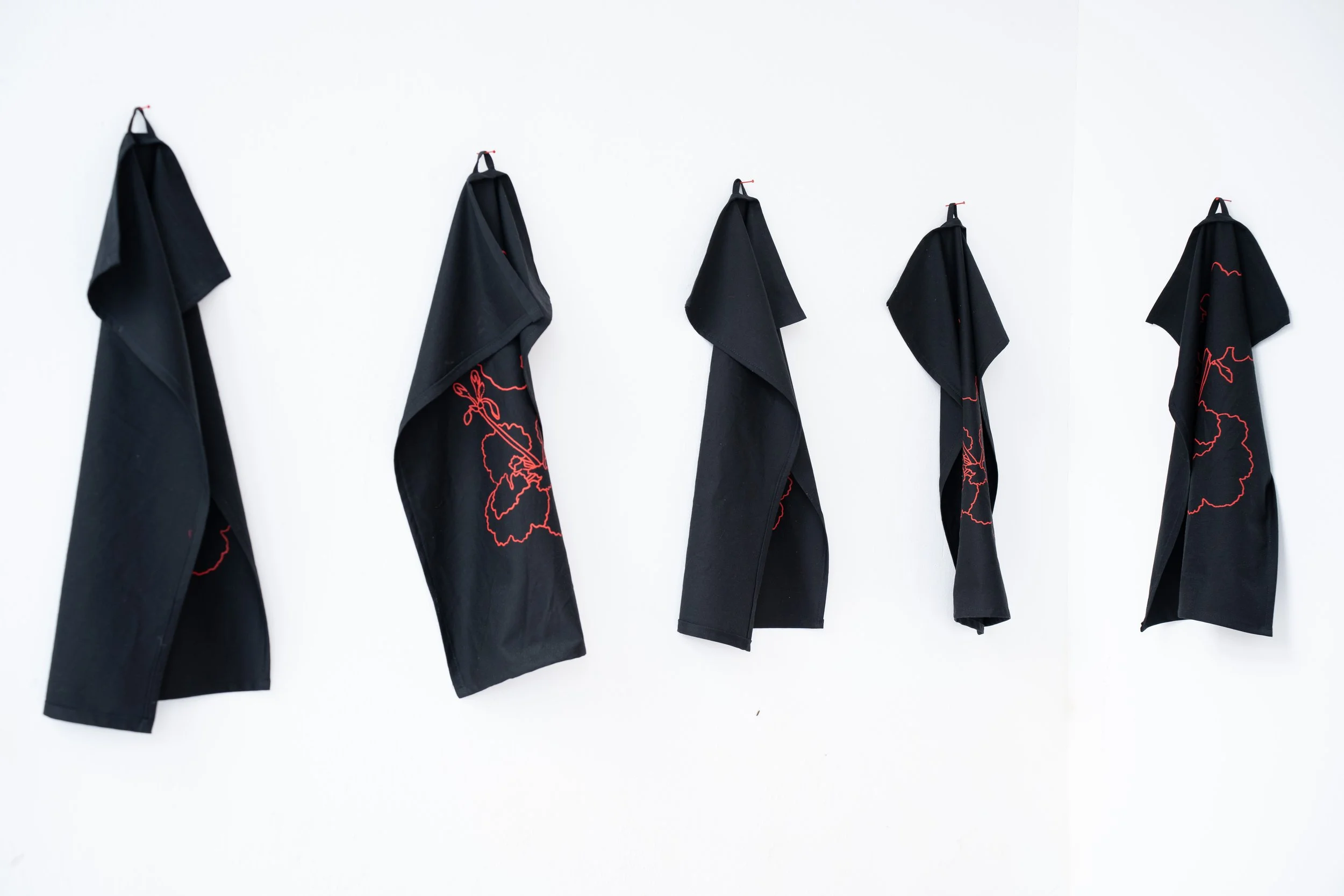
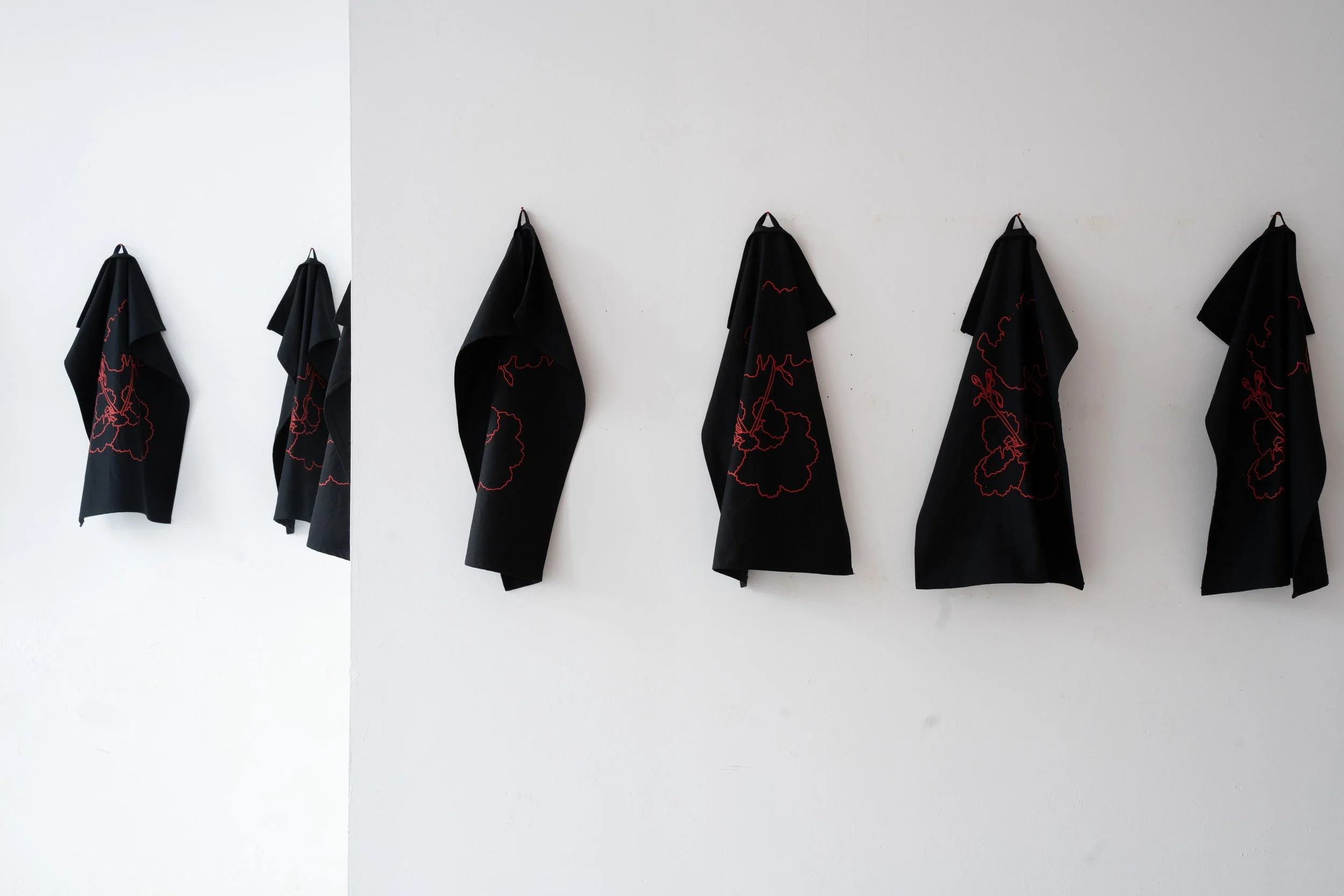
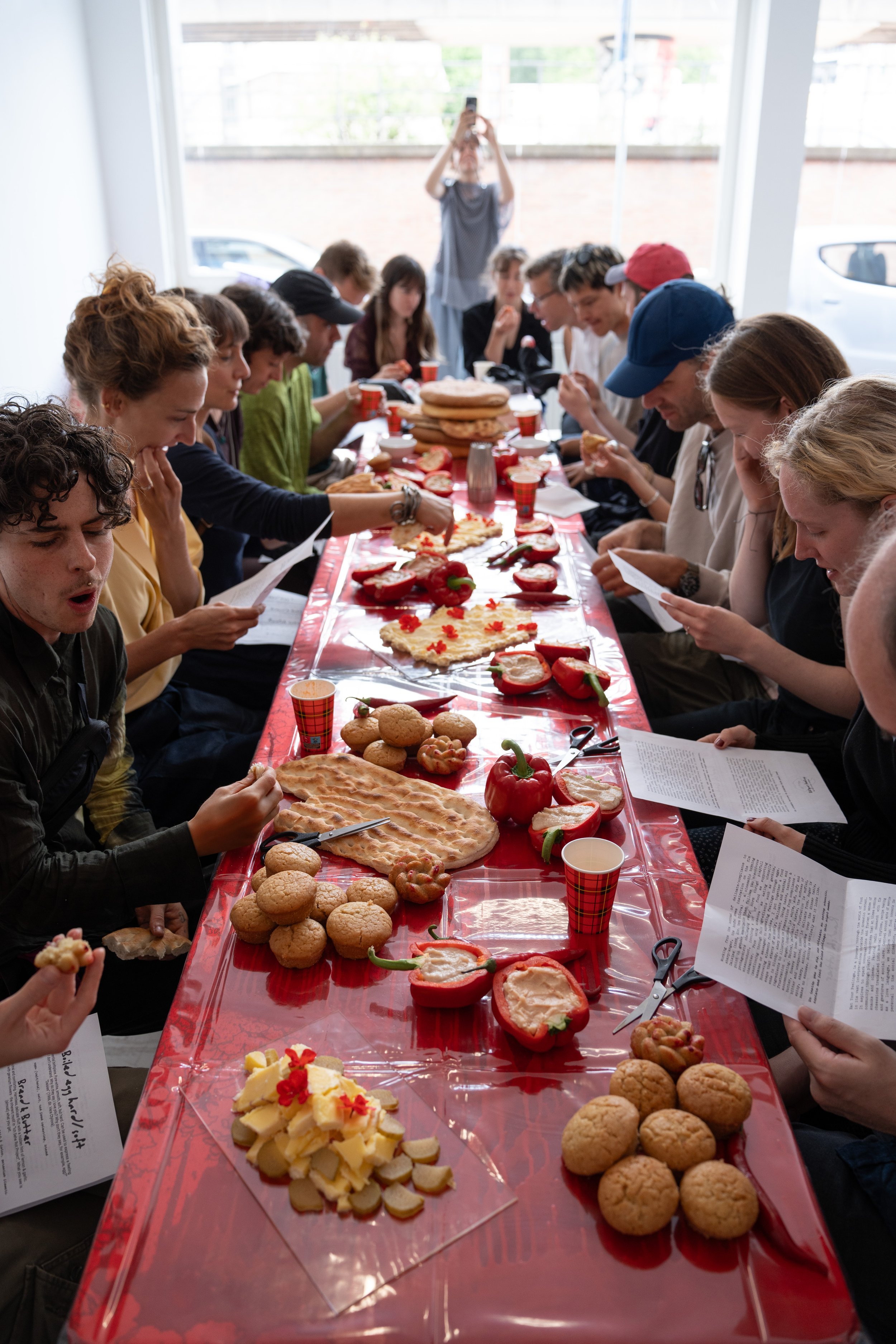
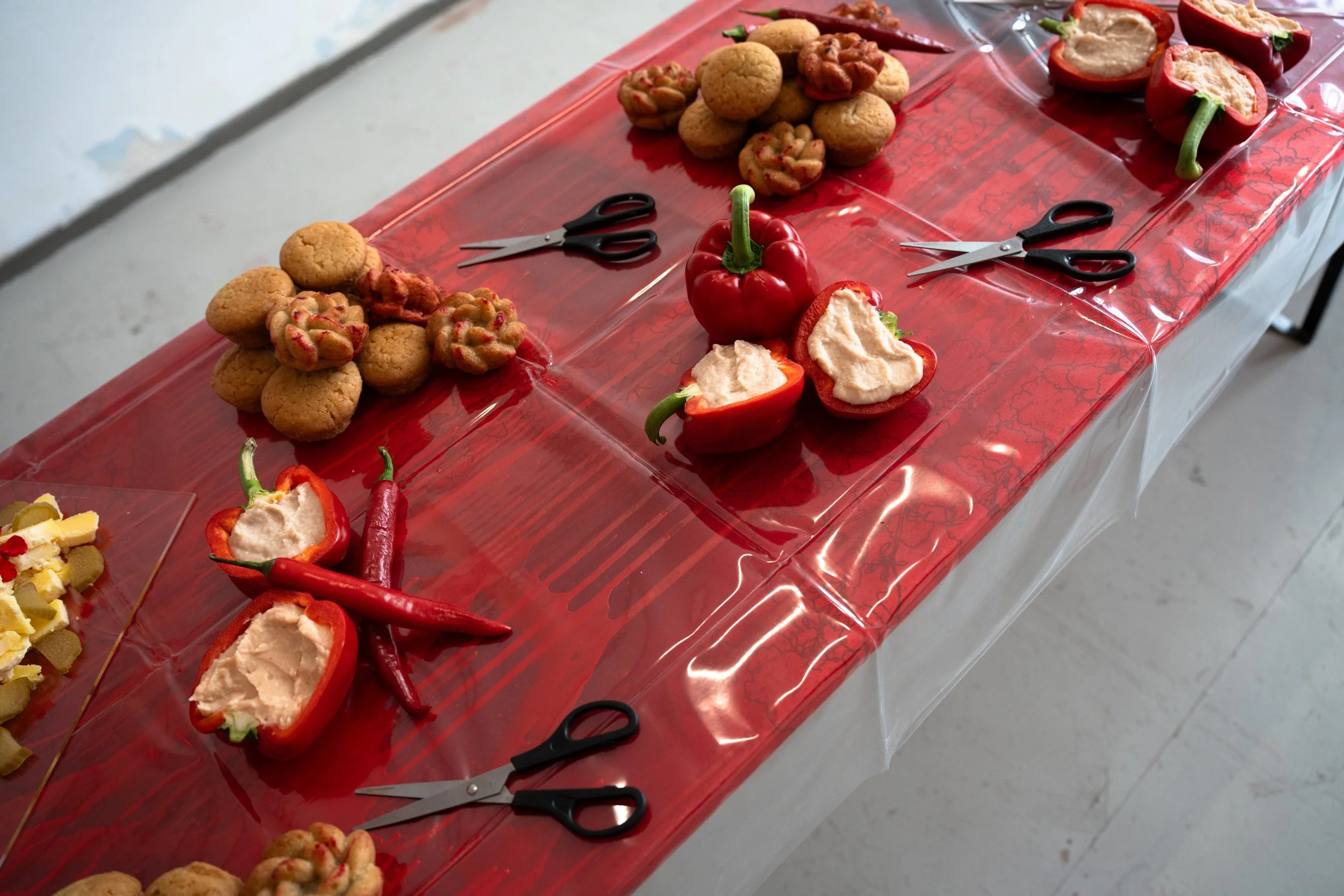
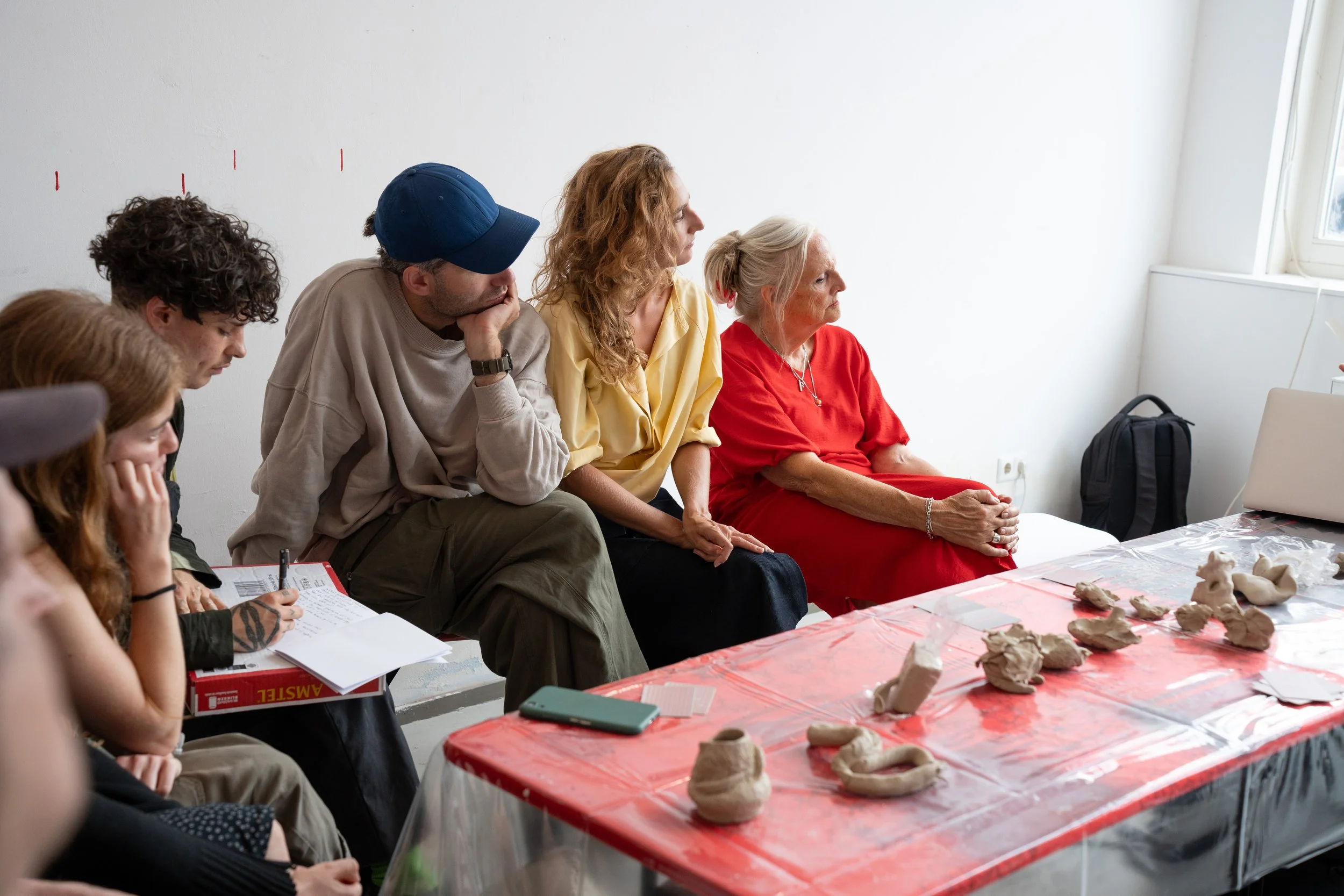
Displayed hand-printed kitchen towels, oversized trash bags, lip gloss, and geranium flowers as a recurrent symbol referring to women's domestic labour. By dressing up a beer table and benches in red satin printed with ornamental geranium motifs, she invites the participants to reflect on traditional female stereotypes—the performance of good manners and proper behavior. This visual piece transformed over the course of the event into a platform that hosted the brunch, the workshop, and the lecture.
Flowers—especially the red geranium—carry a traditional significance of Swiss culture. They evoke memories of her grandmother, who placed great importance on appearance and on how others perceived her. In Switzerland, geraniums commonly adorn balconies, monuments, and traditional buildings. For Manon’s grandmother, displaying geraniums on the balcony symbolized her adherence to conservatism. Critically revisiting this symbol in contrast with the beer bench to expose how conservative ideals and traditions continue to codify gender roles today.
“Be Nice” Installation 2025
Dressed up Canvas — Geranium screen print and acrylic paint on PE Satin, Beer benches.
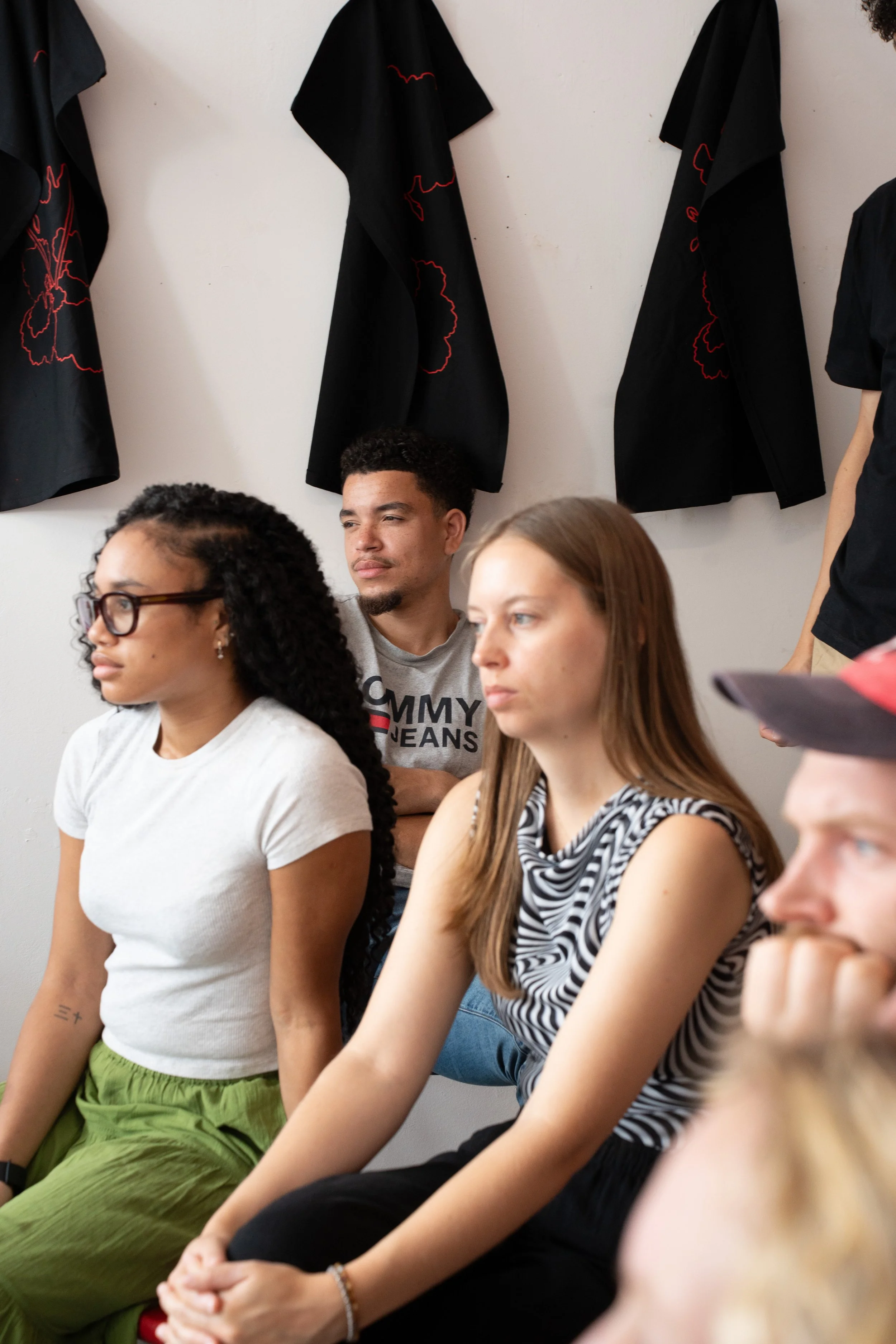
Throw the Towel — Recycled Organic cotton kitchen towels with Geranium prints
Bin Bag — screen printed recycled PE Fabric, foam filling.
Canvas position red Lip Gloss
Romy Bauer
Romy Bauer is a performance and spoken word artist from Limburg. She explores vulnerability, not only as an emotion, but as a form of critique. She is interested in how personal experiences can reveal what often remains hidden within larger structures, such as the art world. Her focus lies on what many artists know but rarely make visible: instability, emotional labor, invisibility. She seeks ways to make something vulnerable, exhausted, and yet connecting visible, within a system that often values marketability over humanity.
Lisa Meijer
Lisa Meijer is a multidisciplinary artist with a background in visual arts, museum studies, and cultural mediation. Her work spans visual studio work, photography, and a practice-based research called IAMAIR, taking the shape of an online agency that explores how performance art and cultural mediation can transform behavior, relationships, and generate poly-perspective narratives by blending fiction with reality. She will document and photograph the Be Nice event
Marie van Haaster
Marie van Haaster is a historian of medicine and emotions. As a PhD Candidate at the European University institute in Florence, she studies practices of consolation in an asylum in Paris at the end of the nineteenth century. Her research shows that the act of consoling someone else or of being consoled, is deeply political. Who are expected to be consoling? Who get to be consoled? What types of suffering - and whose suffering - are worthy of being consoled? In her talk, she will discuss the cultural character of emotions, and show how configurations of gender, ability and class have shaped the way we relate to the suffering of others.